Asia Pacific


Asia Pacific
 8 April 2026
BGIS | HFM is working in partnership with our client Virgin Australia with their in‑flight recycling program. Ever wondered what happens to your can or bottle after your flight touches down? Across the airline’s network, in‑flight waste adds up fast.
As part of their Project Zero, Virgin Australia is working to divert more waste from landfill, and one of the biggest opportunities is in‑flight recycling.
Launched in Perth, the in‑flight recycling program is now expanding to Sydney, Melbourne and Brisbane.
There are unique challenges within aviation environments that must be overcome. We worked closely with the Virgin Australia team to effectively manage the risks.
Space to conduct the work is essential, due to waste streams requiring additional space, a feature particularly lacking both onboard and airside. For example, separating containers from general waste requires an extra set of bins, extra bin liners and a place to store these bin liners on carts. Containers can also not be damaged, dented or crushed to remain eligible for Container Deposit Scheme recycling. Safety and controls for Foreign Object Debris (FOD) is vital, with every decision from bin types, to locations, bin lids, weights, bin liner type and the collection methodology all subject to a FOD risk assessment.
Importantly, security is a key consideration. As a pioneer in inflight container recycling, Virgin Australia was required to develop new airside supply chains, obtaining security identification passes, airside driving licences and vehicle permits with partners who had no prior experience in the aviation space.
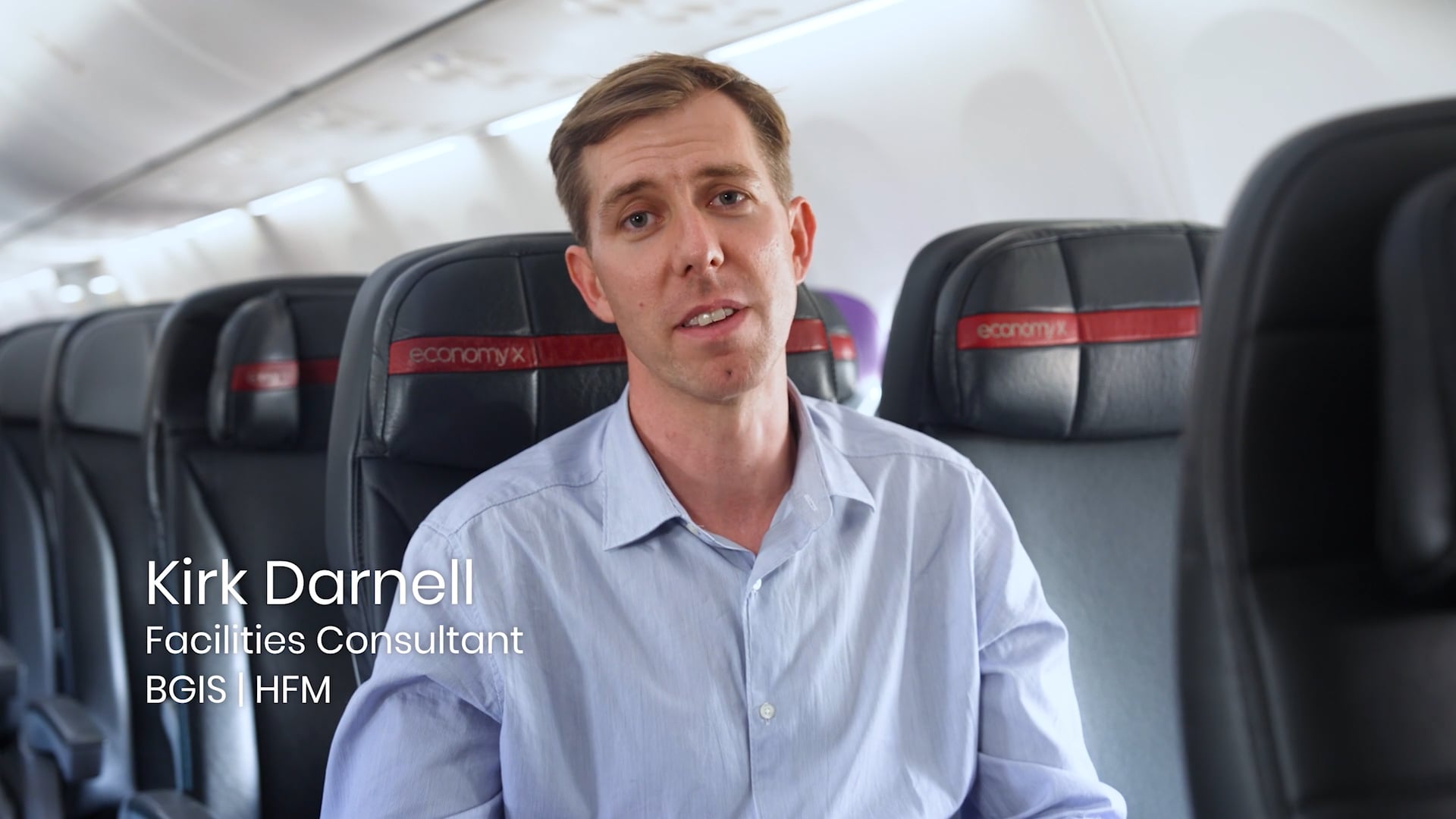
Over 150,000 eligible containers have been diverted from landfill through the program to date, and it is just getting started. For further information please contact Kirk Darnell, Facilities Consultant, BGIS | HFM e: kirk.darnell@hfmassets.com.au
