
Improved air quality results with C-Polar filters for La Trobe University
Improved air quality results with C-Polar filters for La Trobe University
Bioaerosols, particulates, and their impact on health
A bioaerosol is a suspension of airborne particles that contain or are derived from biological microbes such as bacteria, viruses, fungi, and pollen. These microscopic particles can remain airborne for extended periods and be inhaled, potentially leading to adverse health effects. Bioaerosols are of particular concern in indoor and controlled environments, such as hospitals, pharmaceutical cleanrooms, and food production facilities, where microbial contamination can impact product quality and human health.
A particulate (also known as particulate matter, or PM) refers to solid or liquid particles suspended in the air, ranging in size from a few nanometers to several micrometers. These particles can originate from various sources, including dust, smoke, industrial emissions, and biological materials. They are typically categorized based on size:
- PM10: Particles with a diameter of 10 micrometers or smaller.
- PM2.5: Fine particles with a diameter of 2.5 micrometers or smaller, which can penetrate deep into the respiratory system.
- Ultrafine Particles (UFPs): Particles smaller than 0.1 micrometers, which can enter the bloodstream and affect systemic health.
Exposure to bioaerosols and particulates can have significant health implications, particularly for vulnerable populations such as children, the elderly, and individuals with preexisting respiratory conditions. The key health risks associated with these airborne contaminants include:
- Respiratory Issues: Bioaerosols such as mold spores and bacterial endotoxins can trigger asthma, allergies, other respiratory conditions, and other systemic health diseases. Particulate matter, particularly PM2.5 and smaller, can penetrate deep into the lungs and cause inflammation, exacerbating conditions such as chronic obstructive pulmonary disease (COPD) and bronchitis.
- Infectious Disease Transmission: Pathogenic bioaerosols, including airborne viruses and bacteria, can contribute to the spread of infectious diseases. This spread is particularly concerning in healthcare and laboratory environments where preventing cross-contamination is critical.
What is C-POLAR™
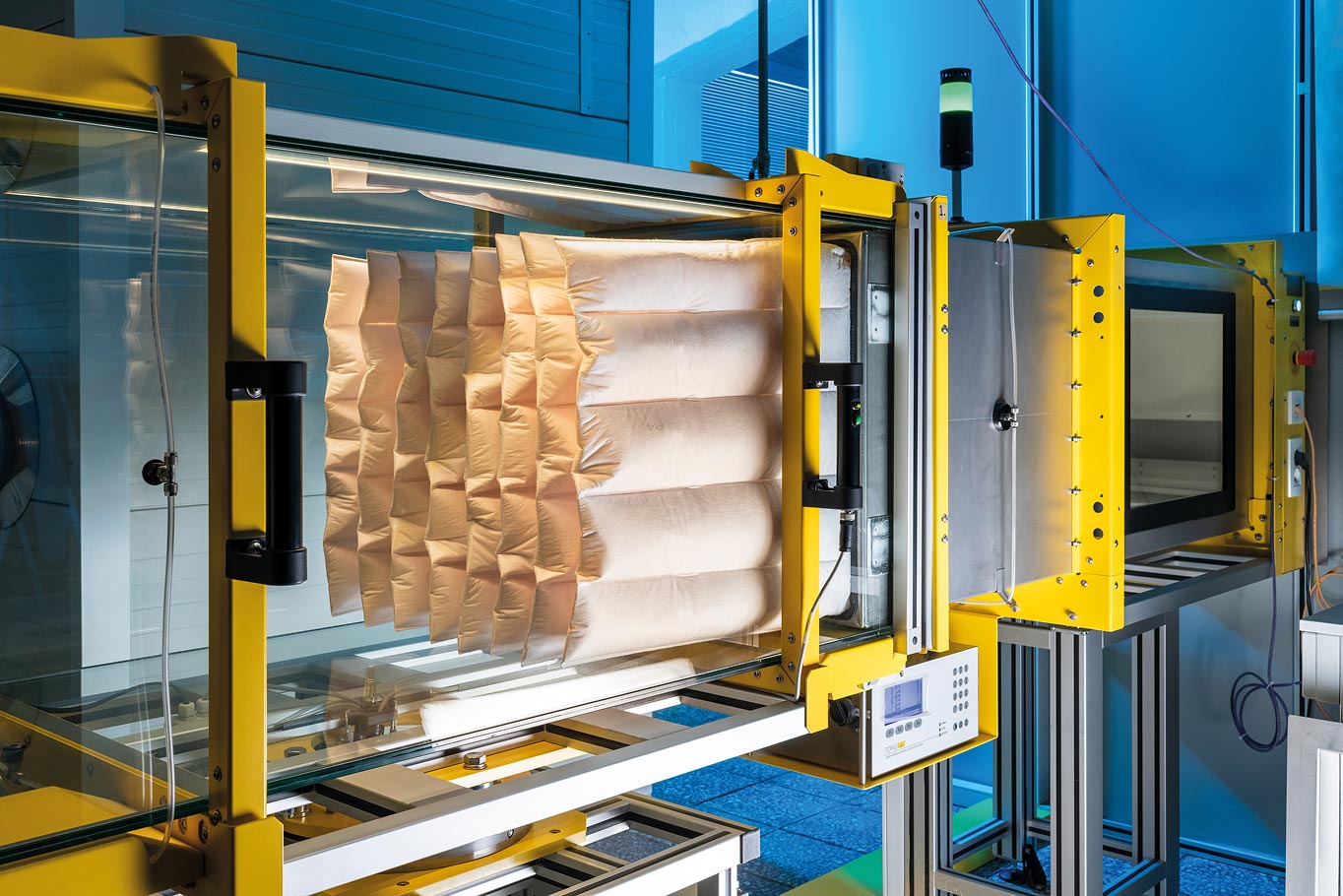
C-POLAR™ is the active ingredient that creates NanoFlashing™, a robust and long-lasting electrostatic charge that forms a mechanical barrier. Peer-reviewed studies show that C-POLAR™ effectively captures and eradicates airborne pathogens, including bacteria, fungi, and viruses such as Influenzas, enterovirus and COVID.
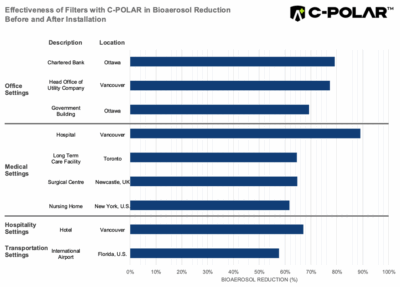
Onsite testing across 9 properties in 7 cities in Canada, the United States, and the United Kingdom has previously demonstrated the effectiveness of C-POLAR™ protected filters in significantly reducing bioaerosols and airborne particles, compared to conventional filters.
Testing Equipment
To verify the effectiveness of C-POLAR protected filters, the BGIS frontline engineering team tested the air using Micronview’s BioAerosol Monitoring System (BAMS), a real-time, continuous airborne microbial monitor compliant with the ISO 21501 standard and FDA 21 CFR Part 11.
BAMS does this through the simultaneous measurement of an individual particle’s size and its ultraviolet (UV)-induced intrinsic fluorescence signal, which allows it to accurately measure the quality of air from an air inlet and air outlet.
The advantage of the BAMS is that it allows real-time data collection, unlike current airborne microbial monitoring, which uses interval, ad-hoc and event-driven sample collections, that require incubation and often takes 1-7 days to generate test results.
Introduction to BioAerosol Monitoring System (BAMS)
The Micronview BioAerosol Monitoring System (BAMS) is an ISO 21501-4 compliant particle counter used to detect both inert and microbial particles in real-time. BAMS is suitable for use in clean and semi- clean environments such as hospitals, laboratories, manufacturing areas and offices. It is appropriate for use across many industries, such as biopharmaceutical, medicine C health, food, aerospace and electronics. Its main applications are contaminant source tracking, indoor-air quality monitoring, compressed gas monitoring, faster recovery after shutdown or maintenance, and contaminant trend analysis.
Results
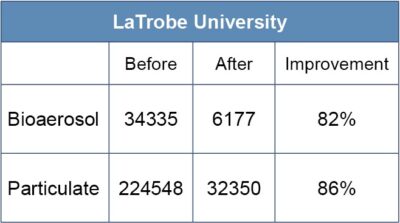
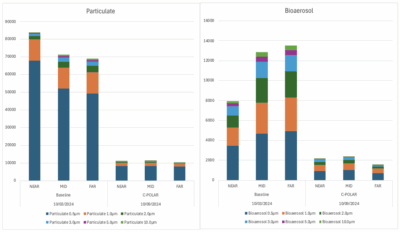
The BAMS unit was utilised at LaTrobe to investigate the variance in Particle and Bioaerosol levels in the supply air before and after filter change. The testing demonstrates the real-world effectiveness of C-POLAR™ protected filters in effectively reducing airborne Particulates and Bioaerosols, compared to conventional filters. There was a considerable reduction in the Bioaerosol counts, with an 82% improvement noted and the Particulate count improving 86%, which is in line with results from previous BAMS testing that was conducted in Canada, the United States, and United Kingdom.